

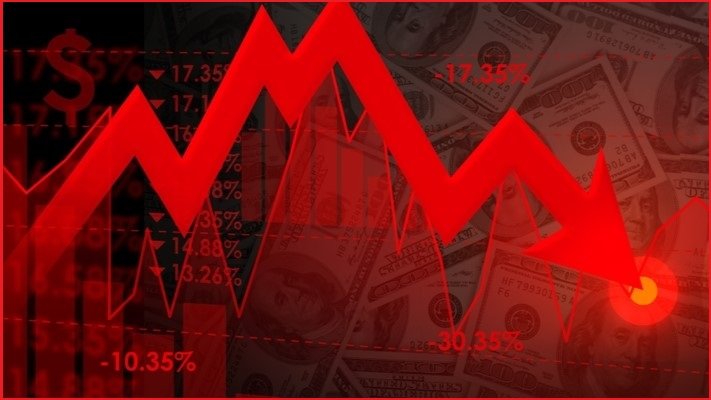
Growing concerns about inflation, rising interest rates, weakening economic conditions and potentially excessive artificial intelligence valuations are prompting financial analysts to warn that stock markets could face a significant correction.
While a market crash is far from certain, several warning signs are emerging simultaneously, raising questions about whether the prolonged technology-led rally is becoming increasingly vulnerable.
Inflation and Interest Rates Pressure Markets
Inflation remains one of the largest threats to financial markets. U.S. consumer prices increased 3.7% year over year in September, reinforcing concerns that inflation is proving more persistent than policymakers anticipated.
Higher interest rates increase borrowing costs for businesses, consumers and governments. They can also place downward pressure on stock valuations, particularly for high-growth companies whose share prices depend heavily on expected future earnings.
The prospect of additional monetary tightening has increased concerns that economic growth could weaken while borrowing costs remain elevated.
Is Artificial Intelligence Becoming Another Market Bubble?
Artificial intelligence has been a major driver of stock market gains, particularly among large technology companies and semiconductor manufacturers.
However, investors are increasingly questioning whether the enormous spending on AI infrastructure will generate sufficient profits to justify current valuations.
The International Monetary Fund warned in its October 2026 Global Financial Stability Report that disappointing AI investment returns could trigger a correction in technology shares and spread financial stress into other markets.
The concern is not necessarily that artificial intelligence lacks long-term potential. Rather, stock prices may be anticipating earnings growth that companies will struggle to deliver within investors’ expected timelines.
Economic Pressures Are Building
Beyond technology valuations, several macroeconomic pressures are creating uncertainty:
-
Persistent inflation: Elevated prices continue to affect household purchasing power.
-
Higher borrowing costs: Businesses and consumers face greater financing expenses.
-
Government debt: Heavy borrowing requirements could contribute to higher bond yields.
-
Consumer weakness: Pressure on household budgets could eventually slow corporate revenue growth.
-
AI investment risks: Large capital expenditures may not produce immediate financial returns.
These factors become particularly concerning when they occur together.
Investment firm Amundi has also highlighted the combination of rising bond yields, inflation concerns and increasing debt within the AI investment ecosystem as important risks for financial markets.
Could Markets Experience a 20%–30% Correction?
A market correction of 10% is relatively common, while a decline of 20% or more generally represents a bear market.
A deeper decline becomes more likely if several negative developments occur simultaneously, including weaker corporate earnings, additional interest-rate increases, tighter lending conditions and disappointing returns on AI investments.
However, a 20%–30% decline is a risk scenario, not a verified market forecast. Strong corporate earnings, continued economic expansion and improving productivity could still support equity valuations.
STA Research Market Outlook
STA Research believes the combination of persistent inflation, elevated borrowing costs, economic uncertainty and stretched AI-related valuations creates an increasingly challenging environment for equity investors.
The greatest concern is that technology valuations remain sensitive to changes in interest-rate expectations and earnings forecasts. Should anticipated AI profits disappoint while financing costs remain elevated, selling pressure could extend beyond technology stocks into the broader market.
Nevertheless, a significant correction is not inevitable. Corporate earnings remain an important source of market support, and the global economy has demonstrated resilience despite challenging financial conditions.
Our outlook remains cautious: Investors should monitor inflation, central bank policy, corporate earnings, bond yields and AI capital spending closely. These indicators will help determine whether current market pressures develop into a conventional correction or something more severe.
The key question is no longer simply whether artificial intelligence will transform the economy, but whether today’s stock valuations already reflect more growth than companies can realistically deliver.

STA Research (StockTargetAdvisor.com) is a independent Investment Research company that specializes in stock forecasting and analysis with integrated AI, based on our platform stocktargetadvisor.com, EST 2007.
Related research

Paradigm Capital Upgrades Cameco to Buy and Lowers Target to C$130
Weekly Stock Market Outlook: Nvidia, AI Stocks and Inflation Data in Focus as Wall Street Looks for a Recovery

TD Securities Cuts Trisura Group to a Hold and Lowers Target to C$45
A monthly perspective in your inbox.
Five research sections in the STA Research Professional Newsletter.