
Canada’s Inflation Eases: Impact on Stocks
Canada’s inflation fell to 2.2% in October, which represents a meaningful step toward the Bank of Canada’s 2% target and has significant implications for financial markets. The decline in inflation suggests that price pressures are moderating, which increases the likelihood that the central bank will adopt a more accommodative monetary policy, potentially cutting interest rates in the coming months. Lower interest rates generally benefit interest-sensitive sectors, such as utilities, telecommunications, pipelines, and real estate investment trusts (REITs), because reduced borrowing costs improve profitability and increase the present value of future cash flows. Stocks likely to benefit from this environment include BCE Inc (BCE:CA) and Telus Corp (T:CA) in telecommunications, Fortis Inc (FTS:CA) in utilities, Enbridge Inc (ENB:CA) and TC Energy (TRP:CA) in pipelines, and RioCan REIT (REI.UN:CA) and H&R REIT (HR.UN:CA) in real estate.
Canadian financials could also see positive effects. Banks and insurance companies, including Royal Bank of Canada (RY:CA), Bank of Montreal (BMO:CA), Toronto-Dominion Bank (TD:CA), and Manulife Financial Corp (MFC:CA), may benefit as lower interest rates reduce funding pressures and stabilize credit conditions, while also supporting lending growth. Investors may view these companies as safer plays in a low-rate, stable-inflation environment.
However, the weakening economic outlook may create headwinds for cyclical sectors. Slower consumer spending, soft GDP growth, and pressures on the housing market could negatively affect energy, industrial, and consumer discretionary stocks. Energy companies such as Cenovus Energy (CVE:CA) and Suncor Energy (SU:CA) may face declining oil demand and lower commodity prices, while industrials like Magellan Aerospace (MAL:CA) could be impacted by reduced capital spending. Consumer discretionary names, particularly those reliant on strong consumer confidence and discretionary income, may see slower sales growth.
The combination of moderating inflation and a slowing economy is likely to favor defensive, high-quality, and dividend-paying stocks over cyclical, economically sensitive names. Investors may gravitate toward companies with strong balance sheets, predictable cash flows, and resilient business models. While interest-sensitive sectors and financials could outperform, energy, industrials, and consumer discretionary stocks may remain under pressure until there are clearer signs of economic stabilization. This environment could also support growth stocks with reliable earnings, as lower interest rates improve discounted cash flow valuations, but caution will be warranted for highly leveraged or cyclical businesses facing weakening demand.

STA Research (StockTargetAdvisor.com) is a independent Investment Research company that specializes in stock forecasting and analysis with integrated AI, based on our platform stocktargetadvisor.com, EST 2007.


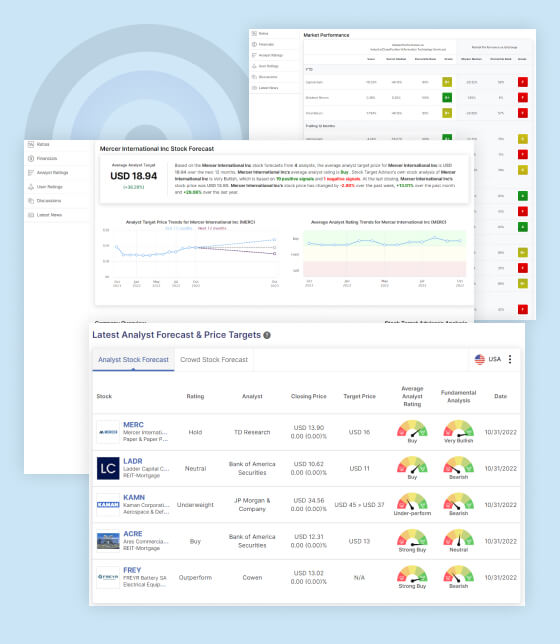




With inflation falling to 2.2%, it’ll be interesting to see how rate cuts will impact the sectors highlighted, like utilities and REITs. Given the potential for lower borrowing costs, it seems like a good time for investors to revisit their portfolios, especially in these interest-sensitive areas.