

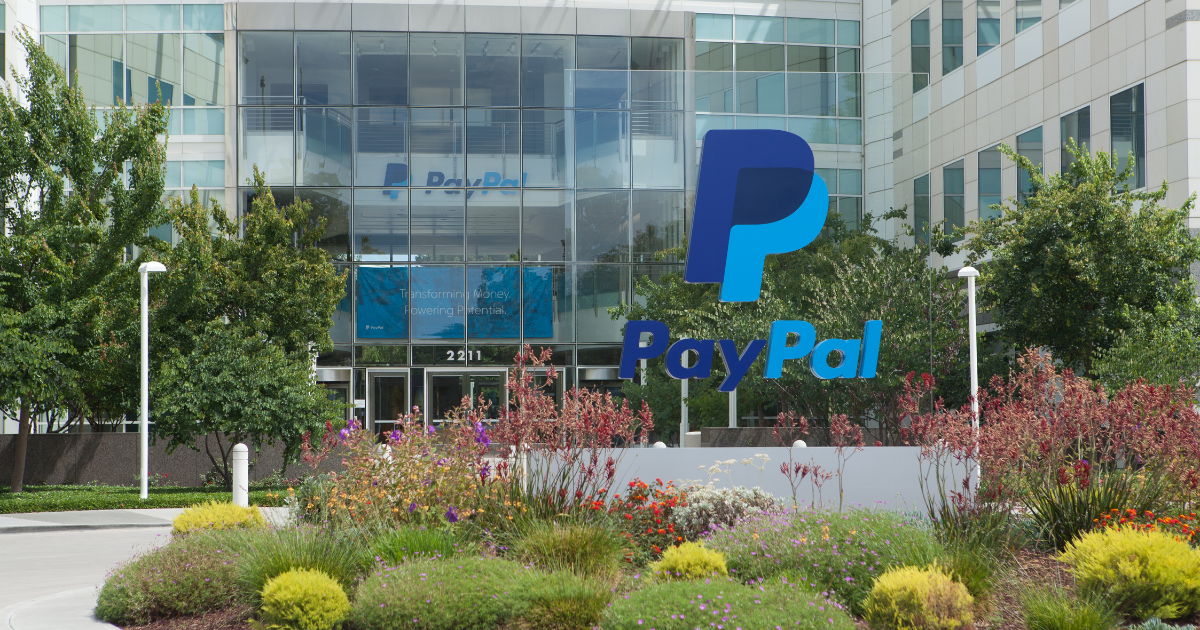
When I think about PayPal Holdings Inc (PYPL), I recall its early days of revolutionizing online payments. Today, it stands as a global digital payments’ powerhouse. But the question remains: Is it still a smart investment at its current price?
PayPal is a company with strong financials and a history of innovation. However, its stock appears to be modestly undervalued, priced at $80 against an intrinsic value of $93.58, offering a margin of safety of 17.39%. Despite this, the challenges it faces, and market expectations paint a complex picture. Right now, I see PayPal as a Hold. While it has long-term potential, new investors might want to wait for a clearer growth path and more favorable valuation.
Before we dive in, we have a special offer! For a limited time, you can get 70% off Stock Target Advisor’s premium features. Claim your discount here!

Riding the Waves: PayPal’s Recent Financial Performance
In Q2 2024, PayPal reported a 10.1% quarter-over-quarter (QoQ) growth in EPS, reaching $1.19, and a remarkable 41.2% year-over-year (YoY) increase. Revenues per share grew to $7.531, indicating robust revenue generation. Despite the short-term growth, its gross margin fell to 45.48% compared to its five-year median of 54.03%. This decline suggests possible cost pressures or strategic investments that might be affecting profitability.
A noteworthy factor is PayPal’s recent increase in share buybacks, with a buyback ratio of 6.40% over the past year, a significant rise from the three-year median of 0.80%. This aggressive repurchasing strategy indicates a focus on enhancing shareholder value by reducing the number of outstanding shares, potentially boosting EPS. While these numbers are promising, there’s more beneath the surface that investors need to consider.
Is now the time to buy PayPal Inc? Access our full analysis report here, it’s free.
Valuation Deep Dive: Is PayPal Really Worth Its Price Tag?
Now, this is where things get interesting—and a bit worrisome. PayPal’s current valuation metrics tell me that the market might be a bit too optimistic about its future. Let’s break down the numbers to see if this optimism is truly justified.
PayPal’s current price of $80 suggests a modest undervaluation compared to its intrinsic value of $93.58. However, its valuation metrics reveal a mixed outlook. The Forward P/E ratio stands at 15.86, which is below its 10-year median of 45.77, signaling potential undervaluation compared to historical norms. The TTM P/E ratio of 18.72 is also considerably lower than the 10-year high of 108.15, suggesting that the market might not fully appreciate PayPal’s earnings potential.

The chart above shows PayPal’s P/E ratio from late 2022 to mid-2024. Despite a declining trend, the ratio remains relatively high at 17.94%. Historically, PayPal has traded at a premium due to its growth potential, but with the slowing revenue growth rate (currently at 8% YoY), this elevated P/E ratio suggests market expectations that may be hard to meet. This can be a red flag, indicating that the stock could be vulnerable if future growth fails to impress.
PayPal’s Price-to-Book (P/B) ratio sits at 3.86, higher than many of its peers. This signals that investors are paying a premium for PayPal’s assets, likely due to the company’s brand value and its extensive network. However, paying a premium can be risky if the company fails to deliver on the high growth that the market has priced in.
Looking beyond the P/E ratio, PayPal’s TTM EV/EBITDA ratio is at 10.67, significantly lower than its 10-year median of 25.99, highlighting potential undervaluation when considering its historical EBITDA performance. The TTM P/S ratio of 2.68 is also closer to the lower end of its historical range, with a 10-year low of 1.94, suggesting that PayPal might currently be undervalued based on its sales.
Free cash flow (FCF) is critical for evaluating a company’s ability to reinvest and return value to shareholders. The chart shows PayPal’s fluctuating FCF over the past quarters, with a significant dip to -$0.35 billion in Q2 2023. Despite recent improvements, the volatility raises concerns about the sustainability of its cash generation, impacting its long-term value. The TTM Price-to-Free-Cash-Flow ratio of 12.54, well below its 10-year median of 24.28, implies that PayPal’s cash flows are strong relative to its current price. However, the inconsistency in FCF might undermine the company’s future growth initiatives.

Free cash flow (FCF) is a critical indicator of a company’s financial health and its ability to reinvest in the business or return value to shareholders. The chart shows PayPal’s FCF fluctuating over various quarters, with notable dips such as the -0.35 billion in Q2 2023. While the company has managed to generate positive cash flow in recent quarters, the inconsistency raises concerns about the sustainability of its cash-generating capabilities.
Competitive Positioning and Growth Prospects:
Despite these valuation concerns, PayPal has maintained a strong financial performance. It reported a robust ROIC of 20.44% against a WACC of 11.08%, consistently outperforming its capital costs. This gap suggests that PayPal is effectively generating economic value, a key indicator of a financially efficient and value-generating company. Its Return on Equity (ROE) of 21.80% aligns with its 10-year high, further underlining the company’s strategic capital deployment.
However, the competitive landscape is evolving rapidly. Fintech rivals like Block (formerly Square) and digital wallets such as Apple Pay and Google Pay are encroaching on PayPal’s market. While PayPal’s Venmo and BNPL services help it retain a competitive edge, these pressures necessitate heavy investment in innovation, squeezing its margins.

Risk & Reward Analysis:
On the risk side, Paypal’s debt situation looks manageable, with a debt-to-equity ratio of 45.96%. This is relatively low compared to its peers, giving PayPal a bit of breathing room. The real kicker, though, is PayPal’s free cash flow. In Q2, it generated $1.4 billion in free cash flow, highlighting its ability to fund new projects, pay down debt, or return value to shareholders.
While analysts estimate PYPL’s revenue to grow to approximately $31.93 billion by the end of 2024 and $36.98 billion by 2026, this outlook reflects a cautious optimism. The average price target stands slightly above the current price at $81.45, suggesting limited upside in the short term.
Ready to take your investments to the next level? For a limited time, get 70% off on Stock Target Advisor. Get started here!

Conclusion:
Given the data, I believe PayPal is a Hold at its current levels. Its modest undervaluation (with a 17.39% margin of safety) suggests some room for upside, but the mixed signals in its valuation metrics and growth prospects warrant caution. The declining P/E ratio, while indicating some undervaluation, still implies market expectations of rapid growth that might be difficult to sustain amidst rising competition and slowing user growth.
For long-term investors, PayPal’s strong fundamentals and cash flow potential offer reasons to be optimistic. However, for new investors, the stock’s current valuation might not justify the risks, and waiting for a more attractive entry point could be prudent.

Muzzammil is a content writer at Stock Target Advisor. He has been writing stock news and analysis at Stock Target Advisor since 2023 and has worked in the financial domain in various roles since 2020. He has previously worked on an equity research firm that analyzed companies listed on the stock markets in the U.S. and Canada and performed fundamental and qualitative analyses of management strength, business strategy, and product/services forecast as indicated by major brokers covering the stock.